
Can Restoring Spinal Muscle Function Help Chronic Low Back Pain?
By the BackSpace Team
Role of the Lumbar Multifidus Muscle in Supporting the Spine
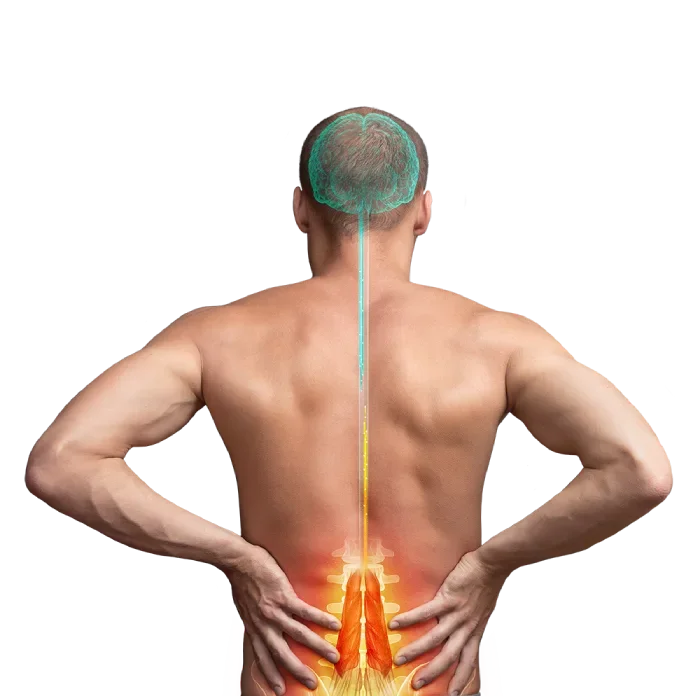
At some point in life, most people will experience low back pain. One aspect associated with this pain relates to the deep muscles that stabilise the spine.
Running along the back of the spine is a group of small stabilising muscles known as the lumbar multifidus. These muscles play an important role in stabilising each segment of the spine and helping to control movement between the vertebrae. When the multifidus muscles are functioning well, they help distribute forces across the spine and provide support during everyday movements such as walking, bending, lifting, and twisting.
When a person experiences an acute episode of low back pain, the multifidus muscle can become inhibited and stop functioning normally. As a result, the spine may lose some of the stability normally provided by this muscle. Everyday activities such as tying your shoes or vacuuming the house can then place greater stress on the lower back. Over time, this increased stress may contribute to the development of chronic low back pain.
Rehabilitation: the Foundation of Recovery
For many people with back pain, rehabilitation is the most important step in recovery. Treatment typically focuses on restoring the function of the muscles that support the spine through targeted exercise. These programs aim to strengthen the muscles, improve control of the spine, and gradually return people to normal daily activities and sport.
Encouragingly, most people will recover through rehabilitation alone. However, some may continue to experience chronic pain despite extensive exercise-based treatment. In these cases, inhibition of the multifidus muscle may be too difficult to overcome through voluntary movement alone, and additional approaches that stimulate the muscle directly may be considered.
Restoring Function with Restorative Neurostimulation
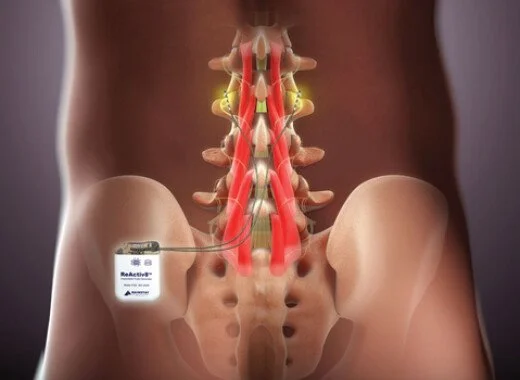
One emerging approach is a therapy known as restorative neurostimulation, which is delivered through a device called ReActiv8.
ReActiv8 is designed to restore the function of the multifidus muscle by stimulating the nerves that control it. The device consists of a small battery, roughly the size of a matchbox, connected to two thin electrical leads. The battery is implanted beneath the skin in the buttock region, while the leads are positioned near the nerves that control the multifidus muscle.
Following implantation and a short recovery period, the therapy sessions begin. During these, the device delivers small electrical pulses that cause the multifidus to gently contract. Each therapy session lasts around 30 minutes and is completed twice per day.
What Does the Research Show?
Clinical trials of the device have shown promising results. In studies conducted by the device manufacturer, approximately 8 out of 10 patients reported substantial improvements in pain or function after one year of treatment, and 9 out of 10 patients reported being satisfied with the therapy.
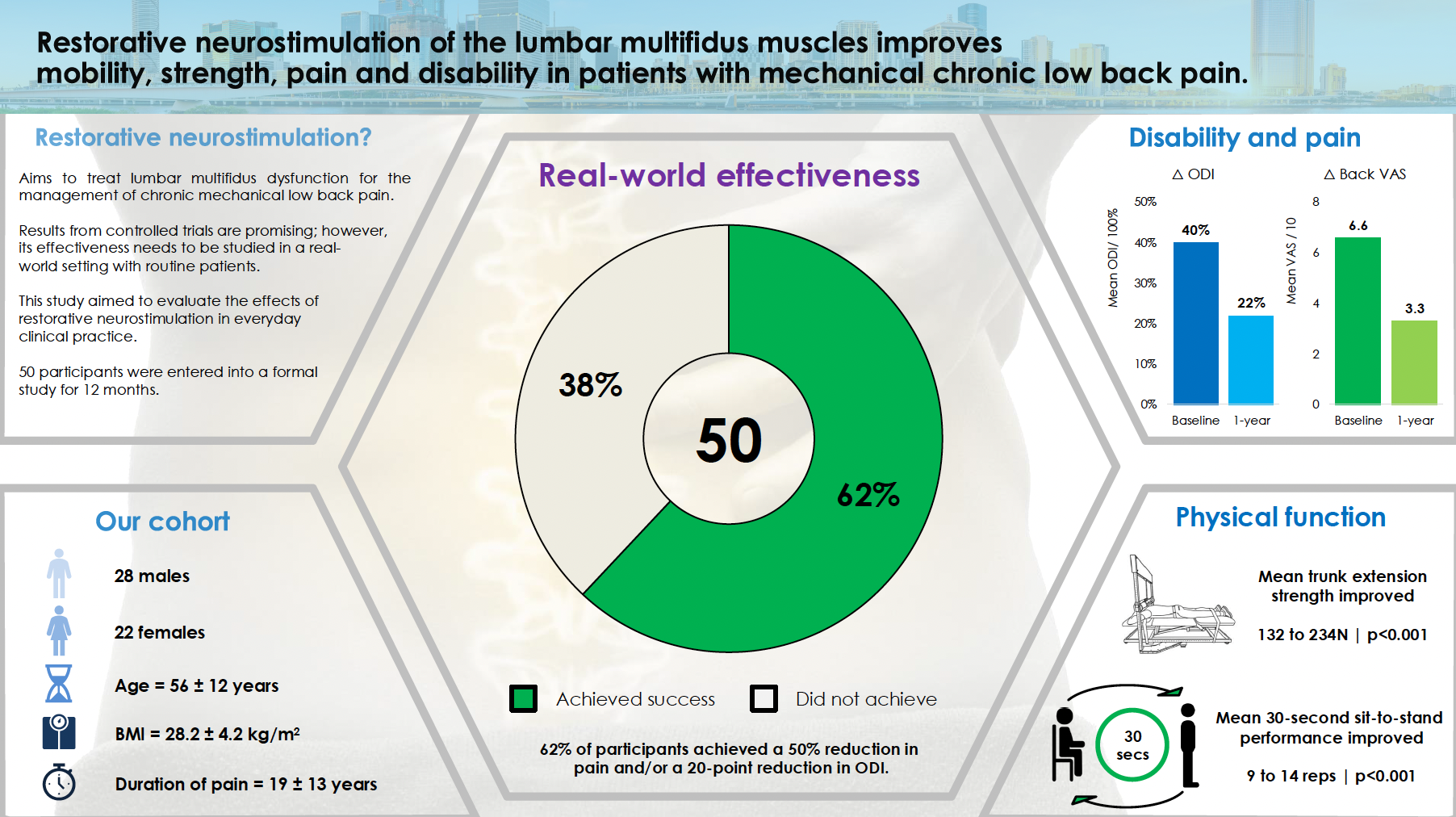
The research team at BackSpace have also been closely involved in evaluating this therapy. Our team has conducted the largest and most comprehensive clinical study of this technology to date, examining outcomes across a wide range of clinical and functional measures.
In our study, participants were assessed before surgery and were followed up regularly over a one-year period. Overall, around 6 out of 10 patients experienced meaningful improvements in pain or disability, 7 out of 10 demonstrated improved physical function during sit-to-stand testing, and average back muscle strength increased by 78%.
Looking Ahead: Improving Recovery from Chronic Low Back Pain
Chronic low back pain is rarely caused by a single problem. Instead, it often involves a combination of factors such as impaired muscle function, poor joint health, and reduced physical conditioning.
Because of this complexity, rehabilitation remains the foundation of treatment. Structured exercise helps restore muscle strength, improve spinal control, and gradually return people to normal daily activities.
For some patients, additional therapies such as restorative neurostimulation may also play a role. However, treatment does not end with the implantation of the device. Rehabilitation should remain as a staple part of recovery continues to be a central part of recovery. This combined approach provides the best opportunity to restore muscle function and improve long-term outcomes.